:Extra Credit Enzian Visit:
Take a look at my ramblings about whatever I watch. I believe a film's success relies heavily on the ability to capture a viewer's attention and pass on the feelings of the piece. This is why we like movies, to bring us into another place and another time...
Wednesday, April 24, 2013
Jaws
We all know the
story. The film that panicked a generation out of the water. I’m talking about
Spielberg’s Jaws. Our story begins in
the quaint, summer destination town of Amity. What seems like innocent drunken
play then turns into a nightmare as the first victim goes missing. Brody, our
protagonist and chief of police, feels that there is something more to the
missing girl than just a boating accident. However, Brody’s efforts are
eclipsed by the impending summer business expected in Amity. A little later
though, there is no denying a shark as a little boy gets devoured in broad
daylight, with the beaches packed full of tourists. This isn’t enough for the
mayor to close the beaches and it takes the death of another man, to finally
charter Quint to hunt down the beast. The plot turns as Brody(with a lifelong
fear of water), Hooper, and Quint must place all their differences aside, and
realize it will take a team to pilot the ship on their mission. For the rest of
the film we aboard the “Orca”, vying for superiority and trading machismo
stories, all in wait for their enemy to show itself. The shark begins a
seemingly vengeful attack on the vessel and the crew is helpless to stop it. No
matter how many methods they employ, the shark continues on its warpath. We
lose Quint to his fabled nemesis and Hooper almost becomes food while
attempting to sedate the giant fish. Brody is left alone on the sinking boat,
with nothing but his own grit and invention to ensure his survival. He destroys
the fish using compressed air and Hooper returns to the surface to witness the
destruction. The men laugh and take a moment to revel as they begin to paddle
home to share the news of their victory.
Considering the
impact of Jaws on the landscape of
cinema today, one can examine this film and detect reasons why it brought such
success to Spielberg and the studio. For one, the direction of the film was
spot on for such an up and comer. His choice to play the narrative out as two
stories within a whole creates drama and fear while also building friendship
and camaraderie with the characters on the screen. In the beginning we are set
in a man versus nature situation, however, it is also man versus society as
there are only three on the island that know of this fish’s power. The mood in
the town is that of a ‘Pleasantville’, a place where trouble doesn’t exist and
everyone is just perfect. However, the camera work and editing combine to place
Brody in an isolated sense. Whenever he is in the town among the people, he is
shown in a state of confusion in reference to the others around. He always seems
to have something on his mind like when he’s at the beach and being spoken to,
he is shown peering over the speaker’s shoulder and looking at the water with
no interest on what the man is saying. Our director’s gaze at that point builds
tension as we await the fate of the people in the water. The score is also
something not to be overlooked. John Williams tells a story through his
crescendos and the infamous Jaws “duuun
dun” that makes one cringe with anxiety.
Looking at the
second half of the film, one can observe that the mood has changed, as the
story becomes one of personalities at odds with one another. The city boy,
sailor, and cop all need to trust each other to win this battle. The scene in
which they are all in the boat’s cabin at night gives the audience a little
bliss before the hell that is about to break loose. The men chat as the
soundscape places a peaceful tone over the scene. This scene, complete with
Quint’s intense monologue and scar trading stories, puts that peace on edge as
we know this wont last. As the final attack begins and the men are running out
of options, suspense is the name of the game. On the deck the next morning, the
editing becomes much more dramatic and the tension begins to peak. Loud score
and quick cuts combined with the special effects of the attack itself make for
a message that still rings true so many years later. This panic, isolation, and
hopelessness presents it self elementally throughout the final minutes of the
film. Spielberg and his crew hit a homerun with this would-be flop. The
brilliant use and mastery of basic film elements are alive in Jaws, giving credit to a young man who
would one day become America’s most beloved director.
The Hunt
Welcome to
Denmark, or should I say Salem, Massachusetts in the late 17th century? This
modern day hysteria-driven drama, tells the story of Lucas, a middle-aged man
with nothing left to offer but his own sorrow and the power of a child’s word
on society. Beginning in a seemingly quiet town, we are introduced to our
protagonist, painted in a quiet and trustworthy way and Klara, the one who
begins it all. Working in the Kindergarten, Lucas is loved by all the children
who cross his path, maybe a little too much. One day, Klara creates a toy heart
to show her affection for her father’s best friend, Lucas. Upon kissing his
lips in a moment of childlike innocence, Lucas senses that he needs to confront
the issue with Klara and tells her to not do that to anyone but her parents.
However, we are the only ones who know and see this, the rest becomes a game of
telephone beginning with Klara’s innocent feeling of rejection towards Lucas.
Next comes the lie. A few small words turns slowly turns the town against
Lucas. Lucas, at first, pays no attention his accusations and assumes it will
all blow over. Soon enough, all friends have left his side, including Klara’s
father Theo, who has been Lucas’ friend since childhood. The story progresses
with an onslaught of isolation and violence. With only a select few remaining
who believe in his innocence, Lucas lives his life in a whole new reality.
Realizing he has nothing to lose, he returns hostility towards an unsurly
supermarket staff and then again at his good friend Theo. We cut to a year
later when all is well and the group is together again to hunt. While in the
woods, a bullet is fired at Lucas and we see this was no accident and the story
is not yet over…
Thomas Vinterberg
and crew bring us into a suspenseful drama as we see the town slowly begin to
craze over Lucas and his apparent guilt. Point blank, the story line defines
this picture. We, as the audience, are given a truthful insight into the
situation and all of its nuances. However, the town only receives portions of
Klara’s lie and in a version of the childhood game telephone, we see how a few
innocent words can become a menace of their own. Through this technique, we are
able to empathize with Lucas and create disdain for the people who were so
close to him as they slowly turn him into a pariah. It has been a while since
I’ve seen the mob mentality of a small town be explored in a film and it was a
journey in which I found my self engrossed from start to finish. Apart from the
story, I would say that the cinematography was in classical form, with nothing
too progressive or abstract being used. However, the coloring of the film
showed the bleakness of the situation and the editing went hand in hand with
this aspect. Scenes were wonderfully juxtaposed to create the suspense that the
story called for and brought Lucas’ plight to heart. The mise en scene in a few
scenes dropped my jaw due to their impact. For instance, in the church on
Christmas Eve, we watched Lucas’ best friend begin to see his innocence and the
whole setting made complete sense within the story. This combined with the diegetic
score made this moment stand apart from the rest and at that point we saw Lucas
at rock bottom, all alone.
Overall, I would
give this picture the highest praise. All the elements worked in unison to
manifest feelings of empathy and hatred at the same time. Combining themes of
societal madness and what it means to be a lifelong friend, I walked away from
this picture with a smile on my face and a little hate for the mass mindset in
my head. I guess the main message of the film would be not to trust kids all
the time for they also lie just as convincingly as adults.
L'Atalante
All aboard L’Atalante
as the film opens with the audience being swept away from the wedding ceremony of
young Juliette, a village girl and Jean,
the captain of the French barge holding the name of the film. We begin to sense
the wonder of what a marriage holds as Juliette is thrust into the unknown
world of barge life. The two lovers have no time alone however, as we meet
first mate Pere Jules, a cabin boy and a slew of cats. Their life together is
off to a rocky start. Juliette seems overwhelmed at the conditions aboard L’Atalante. Her surroundings are
cluttered and dirty, cats roam freely among the cabin and Pere Jules will most
definitely be her demise. However, as Paris squawks in on the radio, Juliette
becomes entranced at the promise of adventure and something new. Seeking to
experience the city of light, Jean promises her a night out but old Jules makes
that impossible. Her attitude drastically transforms, as Jean cannot leave the
barge alone while Jules is out on the town. Deciding to move onward without stepping
foot onshore, they arrive in another town where Jean takes her dancing for some
fun. A peddler takes a liking to Juliette and feeds her the unrelenting notion
that she is missing out on life being married to a barge captain. At night, she
decides to forge her own path and catch a glimpse of the peddler’s promise.
Jean departs upon realizing her absence and Juliette returns to find the barge
gone from its slip. Through out the rest of the film, Jean is in a funk while
Juliette experiences the fear and loneliness accompanied with city life. The
two reunite to finish the film after Pere Jules decides to go on a hunt for the
missing bride. The lovers embrace one another as they make eye contact for the
first time since her disappearance and we are left with a happy thought,
knowing that these two will grow grey together aboard L’Atalante.
Looking at this film from a 21st century eye, one cannot help
but be shocked at the intricacies in this 1934 piece. Apart from the occasional
scratch or missing frame, the edits are clean and narrate the story in a modern
fashion. During one sequence in particular, double exposures are made as Jean
makes a hallucinatory swim in the canal searching for Juliette. Adept and
technically advanced, this particular sequence gives light to the techniques
being invented in the early 20th century. The audience is able to experience
the full gamete of mood swings associated with new love through artful, non-diegetic
musical selections. The roller coaster rises and falls as the lovers realize
their need, and want, for each other. The sounds accompany finely tuned camera
work that seems to push the limits on what film was in L’Atalante’s time. Beautifully composed shots make Vigo’s vision
come to life on the silver screen and show why he inspired director’s like
Truffaut to create magnificent works of their own. There were many shots and
setups that took my breath away with their creativity and innovation and for a
moment, I forgot I was watching an almost 80 year-old art film. As a photographer,
I appreciate ingenuity in all forms of shot composition, giving due credit to
the shots that make me say ‘wow’. The
characters also stand out in the film, creating proper juxtaposition that
brings to life a little drama and the necessary uneasiness that gives a film
soul. The one thing I took away from this piece was a new appreciation for
early French film. The progressive notion on what a film is and how to visually
relate a story is spot on in L’Atalante. It
is visible the amount of thought and heart that went into creating this film
and I will hold its message with me for a long while. Love your life and the
one you are with. Love is a give and take situation that requires sacrifice
from all parties involved and you don’t realize what you had until they are
there no more.
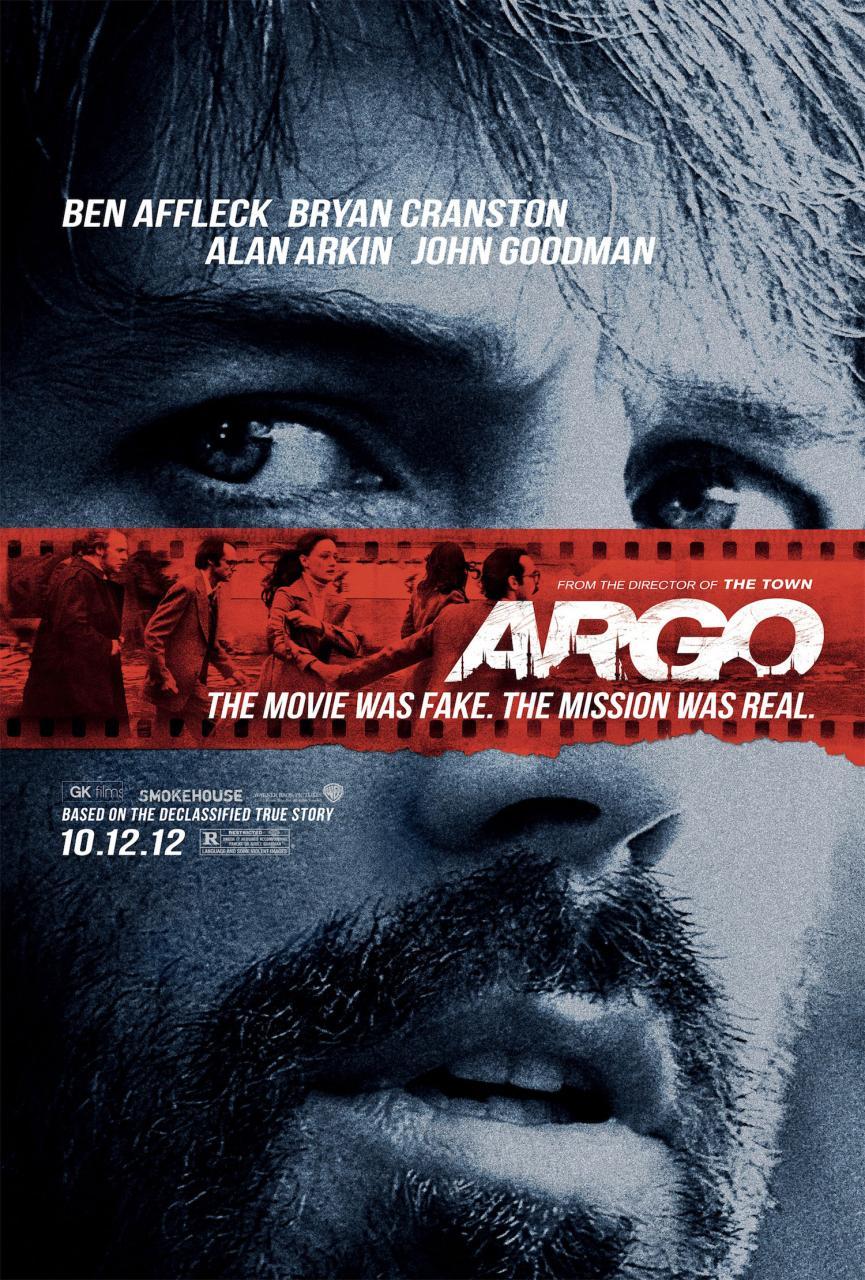
Argo
From the moment of the first visuals appearing on the screen,
the viewer is drawn into the violence and tension surrounding the political
situation in Iran. A brief history of the country portrayed through a
storyboarding effect gives the audience a peek into what the film is going to
be about. Delivering documentary style cinematography, one is left in the
middle ground between fact and fiction with little but known actors’ faces to
draw the line. The desperation seeps out of the screen as you witness a United
States embassy being enveloped by an angry mob intent on destroying western
influence in their homeland. From this point on, we follow a seemingly
impossible plan from inception to completion. Through clever story presentation
and impeccable juxtaposition, the viewer is made aware of what lengths had been
taken to insure a successful “best of the worst plans.”
Aside from the plan
itself, the characters help to define the film in an emotional and relatable
way. We are brought through feelings of despair and hopelessness as 69 days
have passed since their successful escape from the embassy. Living in hiding,
these 6 foreign relations personal see no light at the end of the tunnel. Their
only hope is the fact that no one knows they have escaped. Upon the arrival of
Kevin Harkins (Ben Affleck) they greet their escape plan with doubt and dismay.
At this point, you are completely in the midst of the group and seem to focus
on the individual pains as well as the group dynamic of the situation all at the
same time. With little trust in their sudden “Moses”, you begin to sense that
they wont be able to keep their wits long enough to even make it through to
extraction day.
Just as things seem to be turning around, a plot twist comes to
ruin the day. It is made aware that the CIA has called back the operation and
asked for all evidence to be forgotten and destroyed. The severity of the guilt
that would ride on the conscience of Harkins is palpable in a nice segment
involving the characters introspection and sleepless night kept company by
tobacco and a fine bottle of scotch. You find yourself cheering at his
consideration to disobey the orders sent down to him and when Harkin makes the
decision to go, a brief moment of hope emits quickly followed by the daunting
feat that lay ahead. In the final quarter of the movie, you are transported
into a revolutionary situation in which the airport has been turned into a port
with the sole purpose of exposing spies and trying them for their crimes
against the state. If one thing can be said about Affleck’s direction of the
film, it is that he is no stranger to building anxiety in the mind of the
audience. I found myself clenching the chair as the revolutionary guards are
interrogating them with the boarding gate in sight. Once again, cross cuts are
made to between the CIA headquarters, the Hollywood production office and the
situation itself, creating a moment with which the viewer can fully relate. Argo
stands as an emotional rollercoaster driven by the gravity of the situation. With
balanced story progression and A+ editing, this seemingly popcorn action flick
tugs at our moral senses and puts the viewer in a place no one would care to
visit outside the comfort of a cinematic venue.
Subscribe to:
Posts (Atom)